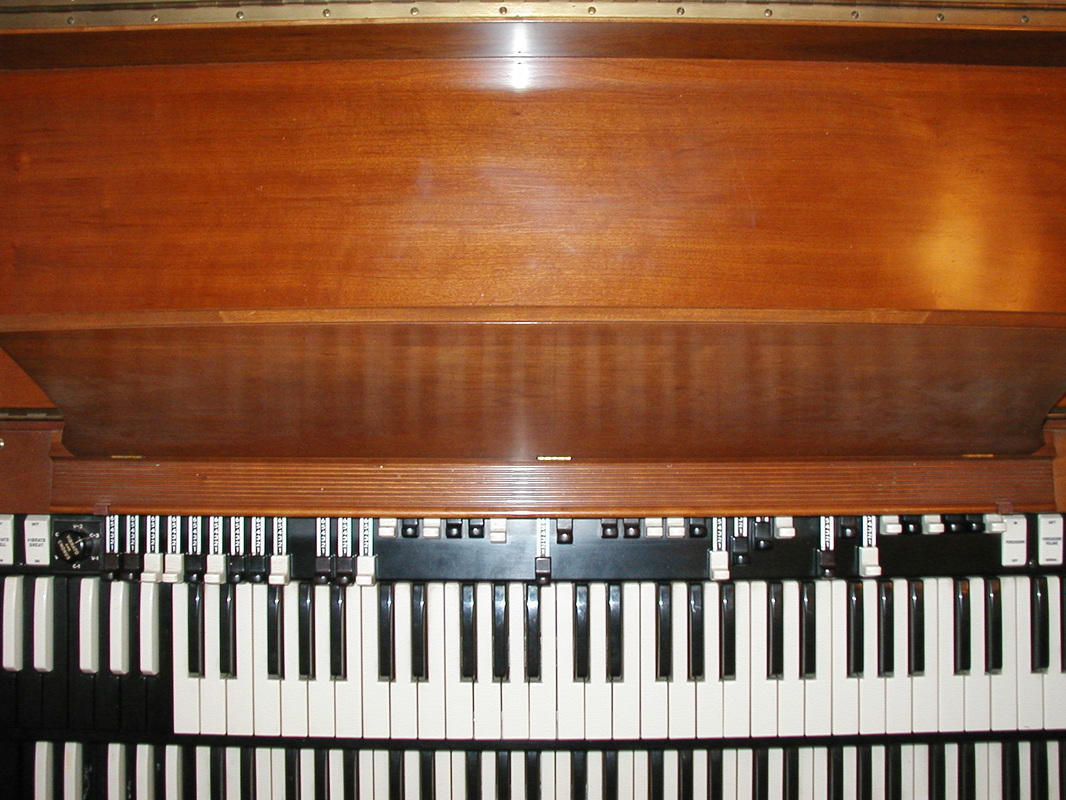
The Jazz Organ Fellowship is a nonprofit 501(c)(3) membership organization dedicated to the preservation of Jazz Organ music through live and recorded presentations, educational seminars and community outreach programs
Jazz Organ music is an American phenomenon, pure and simple. An identifiable 'Jazz Organ sound' was standardized - thanks to Jimmy Smith - on an American-made, electro-mechanical device called the Hammond organ with the help of a sound modification device (also American-made) called the Leslie Tone cabinet.
Unlike most other instrumental music embraced by our society, Jazz Organ music has received much less attention through the years. This music has been met with more apathy than support from writers, record producers, music promoters, club owners and educators. Educational institutions have provided minimal opportunities for young jazz organists to learn and develop those skills necessary to excel. The interest in this music, however, remains strong in spite of the slow developing curriculum.
With public awareness of Jazz Organ seemingly on the increase, the need to address this form of music through outreach programs, educational coursework and community events becomes more important.
While the sound of Jazz Organ remains attractive to young musicians, the actual instrumentation has shifted from the old tone-wheel technology of the Hammond organ to the sampled, digital applications of today. Jazz Organ for this new millennium has been significantly reinforced by the release of numerous digital 'clones' of the original Hammond organ and its unique sound. The fact remains, however, that this original sound is viable and worthy of preservation. All this serves to strengthen the notion that Jazz Organ will not be ignored but rather will thrive for future generations of musicians - therefore the Jazz Organ Fellowship was created in 2004, and has been based in Oakland, CA, as a central location for fans of this art form.

This year (2024) representatives of the Jazz Organ Fellowship will travel to Howard University in Washington DC to meet with Professor Fred Irby III, Music Director and Founder of the Howard University Jazz Ensemble, who will facilitate in our JOF Award ceremony. Prof Irby has graciously provided the university's recital hall as a venue in which we will produce a jazz organ concert featuring our honoree: Dr. Charles Covington. Dr. Covington recently retired from his teaching position at Howard and has a history in the Washington DC and Baltimore arena as a distinguished scholar at both Howard and the Peabody Institute. His resume includes not only educational credentials but accomplishments in weight lifting, national chess tournaments and magic performances.
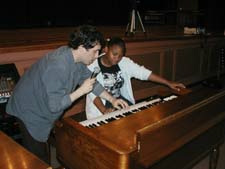
Organist Wil Blades providing one-on-one instruction to a junior high student
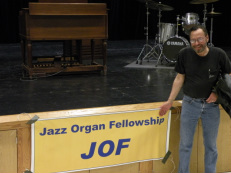
Organist Bobby Pierce speaking to a group of students at a recent JOF workshop
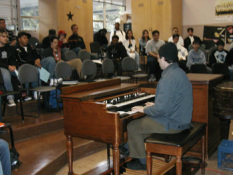
Organist Wil Blades speakling to a class of high school music students
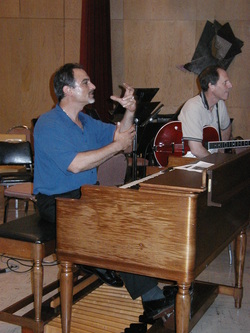
Organaist Tony Monaco giving instruction
The Jazz Organ Fellowship aka JOF provides workshops within existing jazz camps and actually brings the organ combo into the music classes of junior high schools and high schools.
Working with festival directors and band leaders, JOF attempts to fill in the gap that has existed for so many years in music education that is relative to Jazz Organ studies.
The history of this music is broken down in curricular fashion so as to explain the lineage of Jazz Organ music; its main proponents; and the significance of this genre within the wider musical spectrum.
World class Jazz Organists are brought into the fold to contribute their experiential knowledge and demonstrate varied musical styles.
JOF strives to elevate the position of Jazz Organ in all aspects of the music world.
|
|
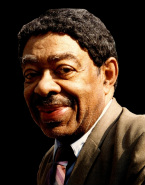
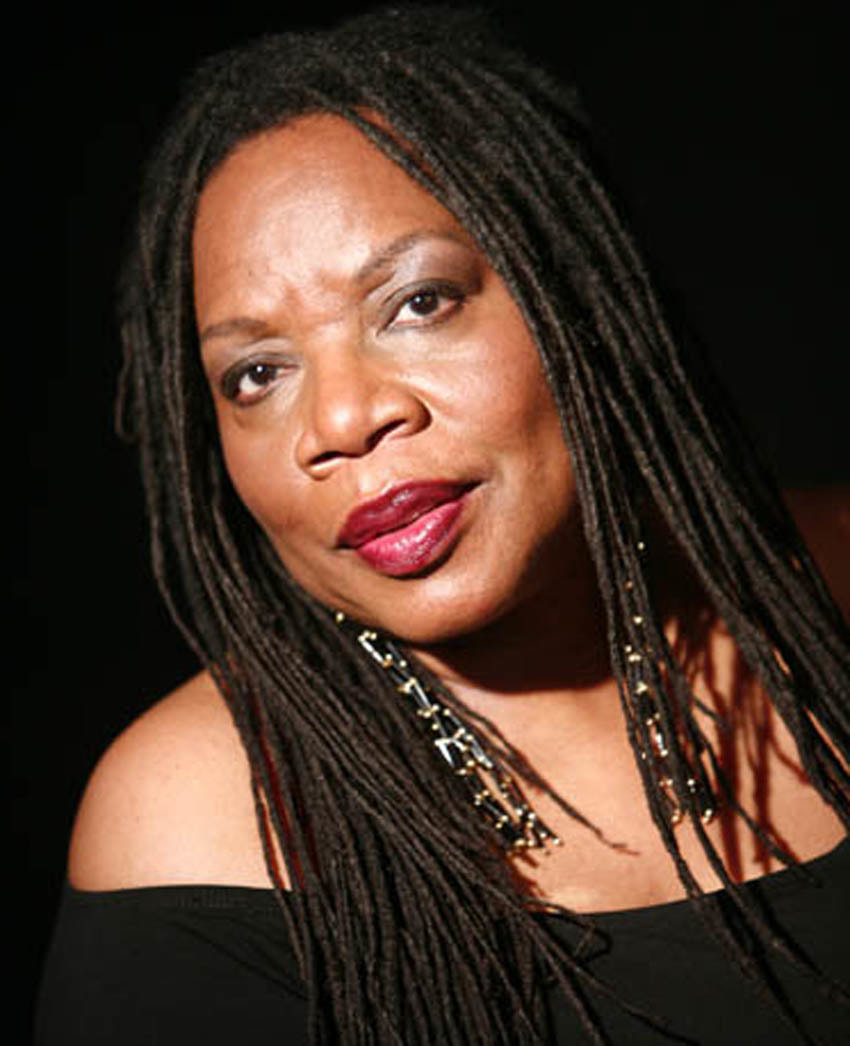
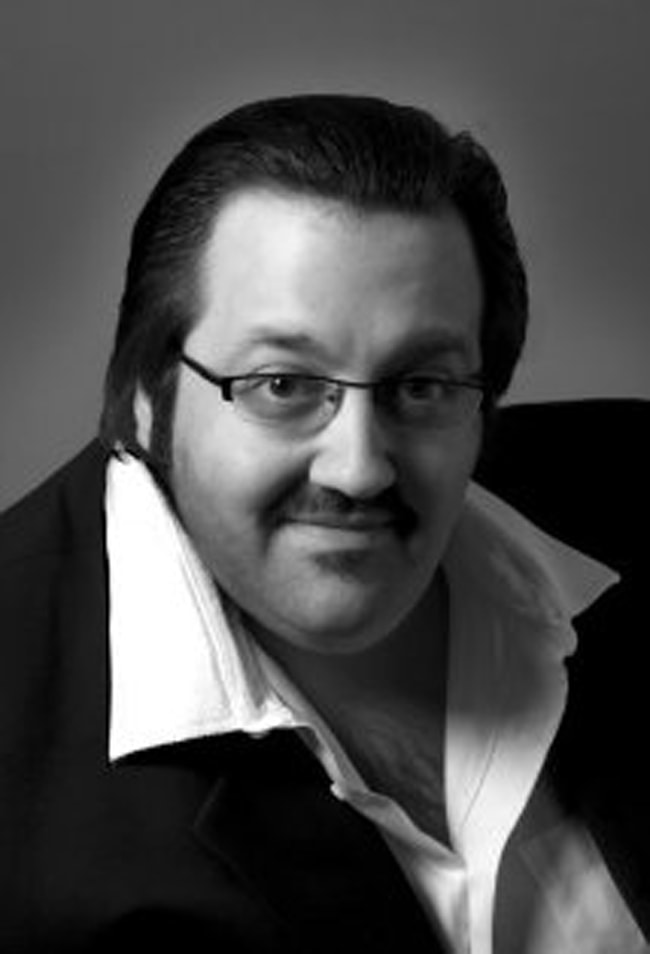
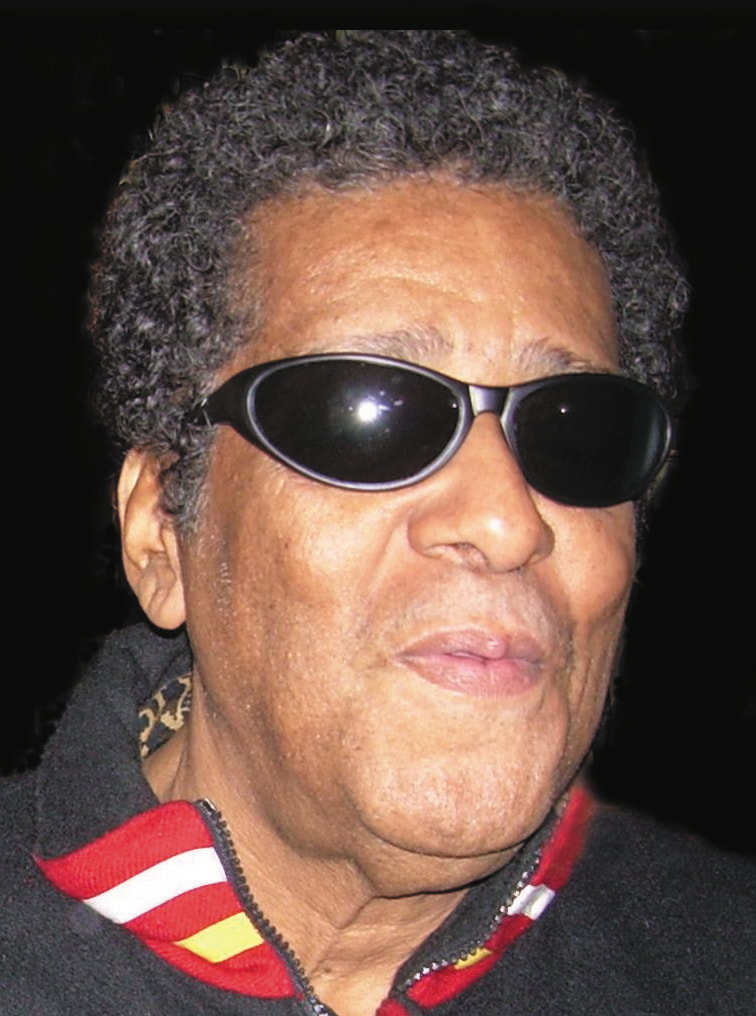
Each year JOF pays tribute to a living jazz organist who has made significant contributions to this music with The JOF Award. We then add their name to our Hall of Fame. Those who have received our prestigious JOF Award are listed to the right. The Jazz Organ Fellowship Hall of Fame is dedicated to those jazz organists (many of whom have passed) who have contributed to the development of this music - to date, they are:
2024 (TBA) Charles Covington Tom Coster Dottie Tim (Timberlake) Clarence Palmer 2023 Chris Foreman Jeff Palmer 2022 Tony Monaco Richard Tee Bill Champlin Tom Coster 2021 Doug Carn Billy Larkin Everette DeVan 2020 Clifford Coulter Reuben Wilson Lyman Woodard 2019 Eddie Baccus, Sr. Earl Van Dyke Lady Margaret Jon Lord 2018 Joey DeFrancesco Lou Bennett Jennell Hawkins Paul Bryant 2017 Amina Claudine Myers Bernie Worrell Butch Cornell Lady Byron (Evelyn Childress) Jackie Ivory 2016 Ronnie Foster Loretta Whyte Beverly Pitts Keith Emerson 2015 Papa John DeFrancesco Eddy Louis Cherry Wainer Bobby Watley 2014 Sonny Phillips (Jalal Rushdan) Freddie Roach Ethel Smith Don Pullen 2013 Chester CT Thompson Milt Buckner Hank Marr Bu Pleasant Baby Face Willette 2012 Melvin Rhyne Joe Bucci Gloria Coleman Ed Kelly Merl Saunders Leon Spencer, Jr. Les Strand 2011 Dr. Lonnie Smith Jackie Davis Charles 'The Burner' Earland Richard 'Groove' Holmes Gene Ludwig 'Big' John Patton Don Patterson Johnny 'Hammond' Smith 2010 Sarah McLawler & Trudy Pitts Bill 'Mr. Honky Tonk' Doggett Brother/Capt'n Jack McDuff Jimmy McGriff Shirley Scott 2009 Rhoda Scott 'Wild' Bill Davis Jimmy Smith Thomas 'Fats' Waller Larry Young (Khalid Yasin) REMEMBER to email us with your suggestions for next year's inductees into The Jazz Organ Fellowship Hall of Fame! AND who you would like to see JOF pay tribute to... [email protected] |
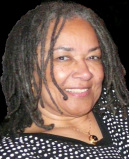 Rhoda Scott 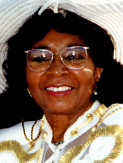 Sarah McLawler 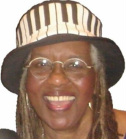 Trudy Pitts 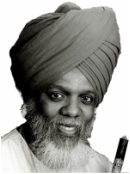 Dr. Lonnie Smith 
Melvin Rhyne
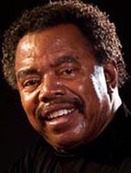
Chester CT Thompson
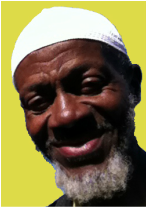 Sonny Phillips (Jalal Rushdan) Sonny Phillips (Jalal Rushdan)
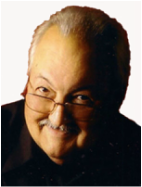
Papa John DeFrancesco 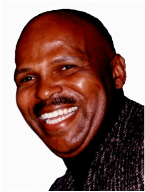
|


|
|
Board of Directors
Executive Director - Pete Fallico
Acting President - Pete Fallico Board Members - Dave Burns Greg Bridges Harry Duncan Carl Yamada Susan Emerick Dr. Brad Stone - Vice Pres Dr. Ray Jones - 2nd Vice Pres Dr. Geoff Roach - Secretary Dr. Rev Sakina Young-Skaggs Past President - Linda Goshay Jones |
Doug Carn

Chris Foreman
Charles Covington
|
Contact the Jazz Organ Fellowship
|
Advisory BoardLinda Goshay Jones
Bill Milkowski Afrikahn Day'vs Lonnie Smith (LS Amps) |
